Political Uses and Impacts of Arts
Definition: Works that contains political subject matter, takes a stand on an issue, addresses a public concern, or awakens viewer sensitivity. However, it is not limited to paintings, the term Arts can also extend to plays or even songs
Article on Arts in Politics
Entertainment 27.2.2014 12.00 pm
Ntsiki Mazwai talks arts and politics

Artist and activist Ntsiki Mazwai poses for pictures following an interview with The Citizen in Newtown, 24 February 2014. Picture: Refilwe Modise NOTE SUBS: For use with City feature
Other than paid-for gig work, the average artist does not really offer much in terms of poltical discourse during election season.
As one artist is reportedly to have replied when asked whether or not his performing at a particular political party’s rally could lead to his fans aligning him to that organisation he said, “Hey man, a gig is a gig”.
Beyond the impassioned pleas of Penny Lebyane to government, urging them to invest in local arts, and Simphiwe Dana’s rhetoric on pertinent situations in South Africa, artists have largely been quiet regarding the upcoming voting.
This should not be the case, says poet and musician Ntsiki Mazwai.
“Arts and politics is an obvious combination, because artists reflect what society is going through,” Mazwai says.
“It is important, at all times, to have a voice in what is happening in society.”
The roles are not as clear as they were under the previous dispensation and the terms of reference have changed.
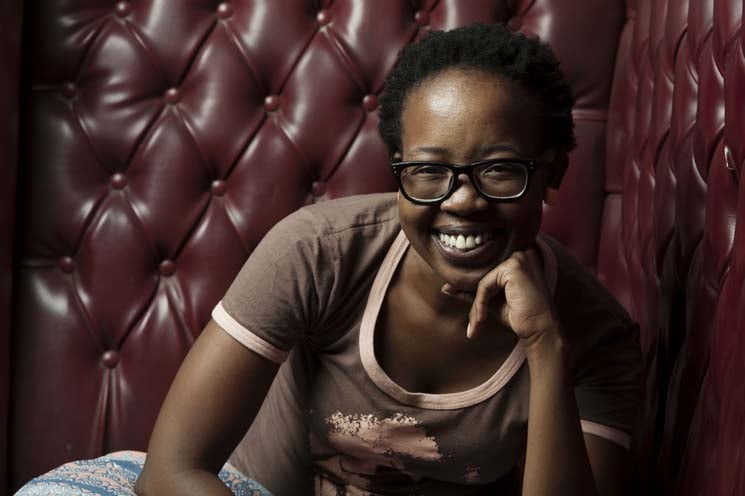
Artist and activist Ntsiki Mazwai poses for pictures following an interview with The Citizen in Newtown, 24 February 2014. Picture: Refilwe Modise
“South Africa is in a potentially dangerous position in that its freedom has exposed new money that has in turn exposed behaviours that come with suddenly having something after having come from nothing,” Mazwai explains.
“And the result is that the role of the artist has been compromised and has lost its value.
“It seems like South Africa fought for its freedom to be like the West. It does not seem like South Africa fought for its freedom to be African.
“If the priority was black conscioussness and the freedom to be black finally, I think that we would be in a different space. Then we would have a dignified nation, a nation who owned who they are.”
Some artists have publicly stated which parties they are affiliated with, but for the most part the calibre of artist or their art is not of great significance to the parties involved. Mazwai feels that artists should steer clear of such political occupations.
“I don’t think an artist should be associated with a political party,” Mazwai says.
“An artist speaks for the people, and I think that once an artist starts speaking on behalf of a political party, then they start thinking about their stomach.
“I think you should always speak for the people because you don’t represent certain policies or agenda of a particular party, but the interests of the people.
“And in the same vein, I can’t make my politics personal. But if you use your craft politically, you put yourself in a position where you can have more change. The responsibility for an artist is a responsibility to the people.”
The current political climate, which includes worries about service delivery protests and incidents like Marikana, encourages active participation in terms of creating art that speaks to these societal challenges.
“Why are we fighting so hard to look like the West and why don’t we have confidence within ourselves?” says Mazwai.
“As South Africans, we have a low collective self-esteem. Just because America, for example, is a bigger country, it does not mean that they produce better art. We need to start to be honest with ourselves and that is what art is supposed to be.”
Examples of Political Art
1) A 1942 U.S. poster

Thinking questions:
1) What message do you think the author was trying to convey or persuade the viewer to do?
2) What is the significance of Uncle Sam in this picture?
3) How would the message change if another American icon was used instead? e.g. American Bald Eagle or Statue of Liberty
Uncle Sam has always been associated with war effort after the famous "We Want You Poster" (1917) hence, reinforcing the message of war. Message changes because in the Arts, the subtle details can make a huge difference because Arts in general, unlike Science relies not on facts to convince but rather emotions. Therefore, different people may experience the same piece of Art differently hence different characters used in Art or however they are portrayed will make a difference.
2) “Peoples of the world don’t want the war to be repeated!” cited Stalin.

2) “Peoples of the world don’t want the war to be repeated!” cited Stalin.
Thinking questions:
1) What are the distinctive features of this poster?
2) How do these features help convey the message of the poster?
The American is depicted and fat presumably from the greed of capitalism. He is also dark skin and seemed to dress like an elite which could mean that the American policymakers' have an air of arrogance with them and is disjointed from their people whilst his Soviet counterpart is depicted as the common man in worker overalls and noticeably more aesthetically appealing. Emphasizes the perceived negatives about the American system compared to the Soviet system.
Key issues related to Political Uses and Impact of Arts
It is quite debatable the extent of impact of the Arts in politics. Different sides of the camp argue for each of their causes.
People who do not believe of the impacts say that the messages within the Arts cannot compare with the amount of thought and individual makes when he decides his political allegiance. Much more practical reasons like standard of living or human rights would easily a stronger basis for argument than what the Arts are portraying. In another words, the decisions made are influenced by other more pressing factors rather than what the Arts portray.
However people who argue for the impacts of the Arts say that Arts has the ability to affect us in subtle ways, it may not result in an immediate change but if exposed to it for prolonged periods, it has the ability to make us reconsider or to even change our stance on an issue. In fact, its power lies in the fact that it is discrete and highly versatile, unlike the vulgar and blatant methods like fiery speeches and mass rallies.
1) What are the distinctive features of this poster?
2) How do these features help convey the message of the poster?
The American is depicted and fat presumably from the greed of capitalism. He is also dark skin and seemed to dress like an elite which could mean that the American policymakers' have an air of arrogance with them and is disjointed from their people whilst his Soviet counterpart is depicted as the common man in worker overalls and noticeably more aesthetically appealing. Emphasizes the perceived negatives about the American system compared to the Soviet system.
Key issues related to Political Uses and Impact of Arts
It is quite debatable the extent of impact of the Arts in politics. Different sides of the camp argue for each of their causes.
People who do not believe of the impacts say that the messages within the Arts cannot compare with the amount of thought and individual makes when he decides his political allegiance. Much more practical reasons like standard of living or human rights would easily a stronger basis for argument than what the Arts are portraying. In another words, the decisions made are influenced by other more pressing factors rather than what the Arts portray.
However people who argue for the impacts of the Arts say that Arts has the ability to affect us in subtle ways, it may not result in an immediate change but if exposed to it for prolonged periods, it has the ability to make us reconsider or to even change our stance on an issue. In fact, its power lies in the fact that it is discrete and highly versatile, unlike the vulgar and blatant methods like fiery speeches and mass rallies.
Essay Question and Outline
"Arts play a diminishing role in modern society." Discuss.
Definitions and keywords:
1) Arts - the expression or application of human creative skill and imagination, typically in a visual form such as a painting or sculpture and also subjects primarily concerned with human creativity and social life
Stand: I disagree to a large extent
TS1: Arts continue to play and important role in society because it provides us with the moral direction in which mankind should follow in pursuit of advancements. " Science may tell us how to bring a dinosaur back to life but the Arts tells us why it's not a good idea". Science is like the paddle of a boat, it gets us to places but it does not tell us what direction to head to.
E.g.
Science has advanced to a level which is able clone organisms which it proved by the creation of Dolly the Sheep, the first cloned animal in history. However literary texts often tells us the adverse effects of cloning and clones, most famously the German Doppelganger which seen as a paranormal clone of a person and is said to be the harbinger of death and bad luck.
TS2: The creative thought processes that pervade the Arts are essential in providing inspiration for our daily lives and the advancement of science and technology. It trains our minds to think outside of the box and lead us to new discoveries.
E.g.
We often look to science fiction/fiction books for inspiration on the next big invention. Jules Verne's Twenty Thousand Leagues Under the Sea and George Lucas's Star Wars Franchise are notable examples of how elements of science fiction can induce scientists to attempt to create similar contraptions. In the case of the Nautilus, it manifested itself into the modern day submarine.
TS3: The Arts are great tools to mobilise and rally people. The Arts is able to convey messages on an emotional level that may appeal to more people.
E.g.
Look no further than the cult of Harry Potter, the power of the creativity of the mind and the English Literature is plain for all the see. Needs no explanation
Propaganda posters and movies used throughout the world. Governments often use short films by filmmakers like Royston Tan to direct thought provoking and heart wrenching short films to convey message.
Counter Point 1: The role of technology has greatly diminished the entertainment value of the Arts and has replaced the Arts as the main form of entertainment in modern society.
E.g
Youths spend and increasingly large amount of time online. Games like Halo and Grand Theft Auto are able to make billions of dollars within a few weeks but new plays or new books are unable to match such a monstrous demand

No comments:
Post a Comment